
Issaquena Projected Versus Actual Release
Mississippi’s public MDOC detail record calls its estimate the Tentative Release Date. That is the exact field name. It describes an anticipated release from incarceration after eligible earned-time adjustments and credit for time served. It is not an actual exit timestamp. It is also not a promise. The actual release occurs only after the controlling legal and administrative steps are complete and a discharge certificate is issued.
MDOC computes several dates, including parole eligibility, earned-release supervision, tentative release or discharge, and maximum release. Maximum discharge is the expected sentence end without early-release allowances and is described as fixed. Parole and earned-release supervision can move a person from a secure facility into conditional community release. Neither means every duty has ended.
A pretrial detainee is different. That person has not yet received a prison sentence to compute. Bond, dismissal, plea, sentencing, remand, or another court order can change custody. Remand means the court orders a person held or returned to custody. The docket may explain authority for release, but facility staff must confirm physical departure.
An observed MDOC detail layout documents the exact field label at the official MDOC inmate detail source.
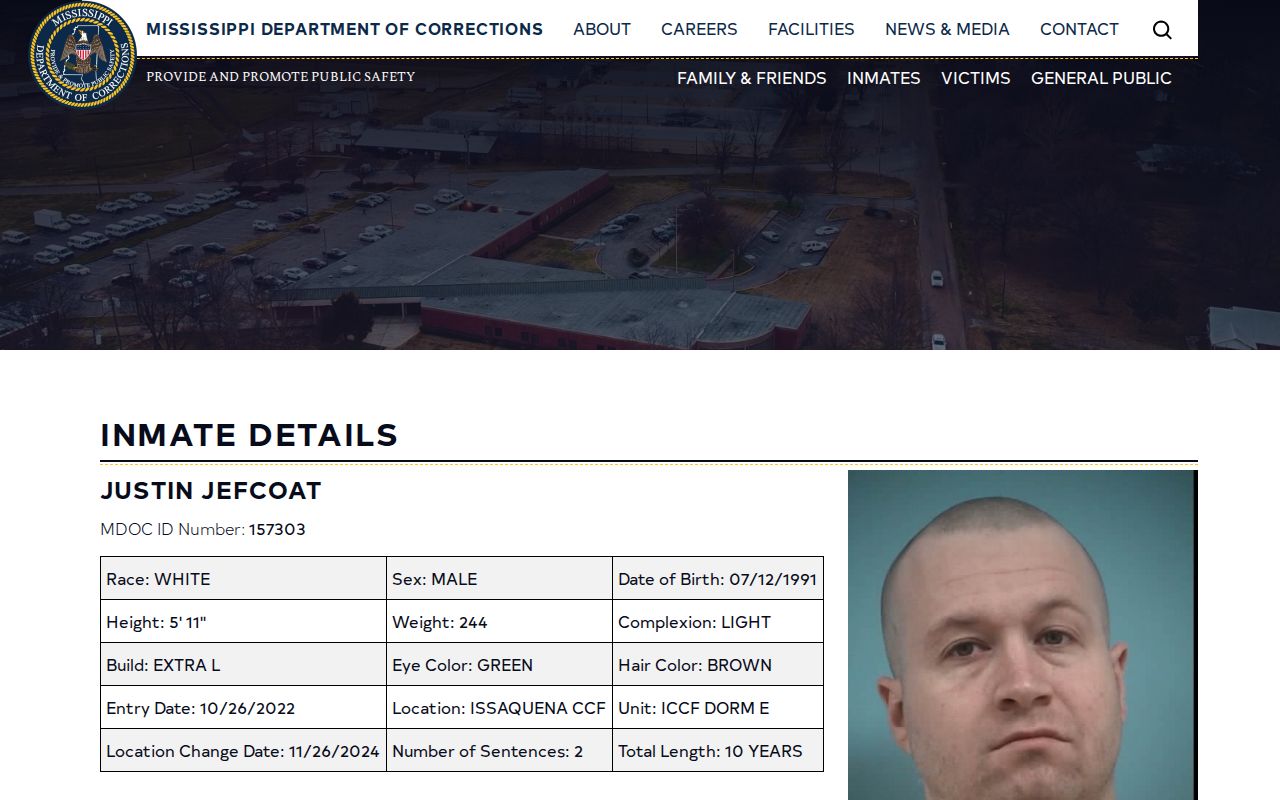
The detail view ties the date to a state sentence record, not to every local detainee housed at Issaquena CCF.
Issaquena Release Date Ownership
Who owns the sentence matters more than the facility name. Issaquena County Correctional Facility is a regional facility that holds both convicted state inmates and pretrial county inmates. An MDOC prisoner housed there receives state time computation. A local detainee or county-sentenced person requires a facility and court check. Applying a state formula to everyone inside the same building would produce the wrong answer.
| Person’s status | Primary date source | Final confirmation |
|---|---|---|
| Pretrial county detainee | Court docket, bond order, and facility status | Issaquena CCF or sheriff plus the court order |
| County-sentenced person | Sentencing order, time served, and local record | Facility and clerk, with any applicable credit confirmed |
| MDOC state inmate | MDOC Tentative Release Date and time sheet | Case manager, MDOC Records, then discharge certificate |
| Parole or ERS candidate | Eligibility date and release plan | Board or MDOC action plus physical release processing |
For a person who has already left the county booking status, absence from a roster is not enough. The change could be a transfer to MDOC, another county, or a different custodian. A current-custody portal answers where a person is held now. A discharge record answers whether that custody term ended.
This ownership check also prevents misuse of the 85 percent shorthand. An MDOC prisoner at Issaquena CCF may have a state Tentative Release Date and statutory earned-time computation. A local pretrial detainee has no such state estimate. A county-sentenced person may have local credit or a court-controlled term, but no Issaquena-specific earned-time rate was verified. Start with legal custody, then ask that custodian for its calculation.
Find an Issaquena Release Date
Begin with the custody type, then use the matching source. The MDOC Inmate Search accepts First Name, Last Name, or MDOC ID Number. Its observed detail records include location, unit, sentence facts, county of conviction, and the Tentative Release Date. It is an active-inmate search, not a permanent discharge archive.
- Identify whether the person is a county detainee, county-sentenced person, or MDOC inmate. Ask the facility if the status is unclear.
- For an MDOC inmate, search by MDOC ID when possible. Otherwise use the full name and carefully compare identity and sentence details.
- Record the exact Tentative Release Date, location, sentence count, and county of conviction shown on the correct state result.
- Ask the inmate’s case manager for the current time sheet and exact planned date after travel arrangements are checked.
- For county custody, compare the sentencing, bond, dismissal, or other final order with the facility’s release status.
- After departure, request the discharge certificate or county release record rather than treating an earlier estimate as proof.
The MDOC search form can be reviewed at the official offender search source.
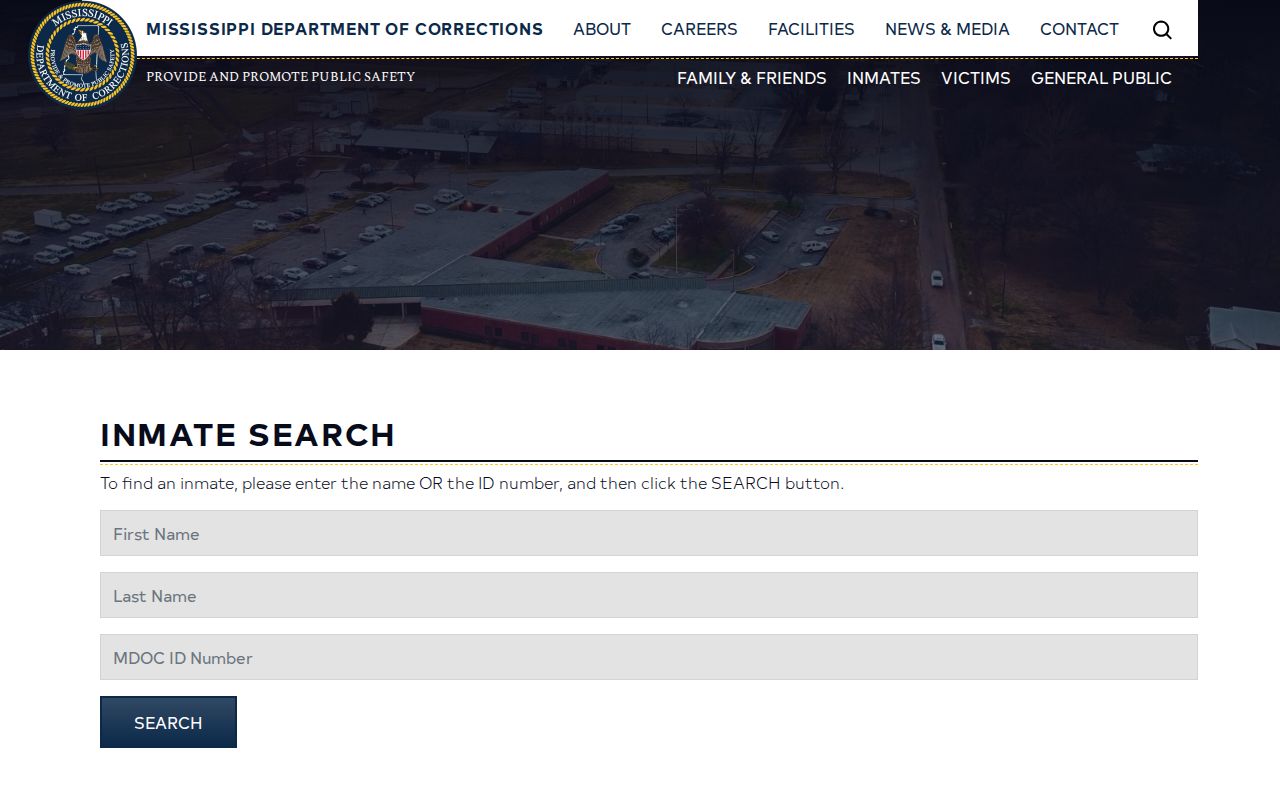
The screenshot shows the three supported entry fields, which help prevent guesses based on an unverified roster absence.
If a former state inmate no longer appears, request the time sheet, status history, release or discharge action, and discharge certificate from MDOC Records. The Issaquena County release search also explains the county record path for someone who is no longer on a live custody list.
Note: A missing MDOC result is not proof of an Issaquena County release date or final discharge.
Mississippi Earned Release Time
Miss. Code § 47-5-138 provides that an eligible inmate serving a sentence imposed after June 30, 1995, may receive 4.5 days of earned time for each 30 days served when conduct and performance rules are met. The reduction is capped at 15 percent of the sentence. This leads to the common shorthand that an eligible person may serve 85 percent in a facility and the last 15 percent on earned-release supervision.
That shorthand is not a universal release-date calculator. Eligibility and exclusions matter. The law in force on the offense and sentence dates can control. MDOC lists disqualifiers that include life sentences, habitual-offender status, sex crimes, adult-prison escape or attempted escape, Commissioner-ordered forfeiture, and unmet mandatory parole portions for certain designated crimes. Some sentences are served day for day. An individual time computation must come from the official record.
Earned-release supervision is conditional. Near an ERS date, MDOC says the inmate receives a letter and supplies a proposed residence. A probation or parole agent inspects that plan. The person retains inmate status and MDOC jurisdiction after leaving secure custody. If ERS is revoked, the remaining balance may be served inside, and time spent on ERS does not reduce the custodial balance as a reader might expect.
The official MDOC supervision source illustrates the state’s ERS and parole terms. Review it at MDOC Types of Supervision.

The visual supports the crucial distinction between a release to MDOC supervision and a completed sentence.
Issaquena Parole Eligibility Dates
Parole eligibility is not the Tentative Release Date. Current Parole Board rules summarize several post-1995 thresholds. A qualifying nonviolent offender generally reaches eligibility at 25 percent or ten years, whichever is less. A qualifying violent offender under § 97-3-2 generally reaches it at 50 percent or twenty years, whichever is less. Designated armed robbery, drive-by shooting, and carjacking offenses are summarized at 60 percent or twenty-five years, whichever is less.
Eligibility only allows review. It does not guarantee a grant or an immediate exit from Issaquena CCF. Habitual, sex, capital, murder, human-trafficking, drug-trafficking, and other statutory categories can be excluded. A sentence may also state that parole is barred. The signed 2026 Senate Bill 2821 took effect July 1, 2026, and changed § 47-7-3 for the capital-sexual-battery and life-without-parole framework. Current enacted text and the individual offense date must control any case-specific conclusion.
A parole grant can still be followed by plan review, conditions, detainer checks, and discharge processing. A detainer is another agency’s request to hold the person or notify that agency before release. The grant date and the gate date can therefore differ.
Issaquena Jail Credit Computation
The MDOC handbook says eligible presentence jail credit must fall between the offense and earliest sentence date. It must apply to the cause being served and cannot duplicate another credit. MDOC obtains certification from the county of conviction. It then deducts allowable credit from the earliest sentence date to set the sentence-begin date.
Time spent in county jail after an MDOC sentence is imposed is not shown separately as jail credit because it is already calculated into time. That state method governs an MDOC sentence even while the person is housed at Issaquena CCF. It does not set a date for every local pretrial or county-sentenced person.
Mississippi statutes §§ 47-5-413 and 47-5-431 address earned time for qualifying county inmates doing specified public-service or trash work. No Issaquena-specific sheriff policy or rate was found. Do not assume those credits apply. Confirm local time served through the sentencing order, clerk, and facility.
Why Issaquena Release Dates Change
A tentative date is the output of facts that can change. Certified jail credit may arrive. A court may correct a sentence. MDOC may interpret concurrent sentences, served at the same time, differently from consecutive sentences, served one after another. Earned time may be awarded or forfeited. A new case or detainer can also stop the expected departure.
| Change | Possible effect | Best confirmation |
|---|---|---|
| Certified jail credit | Moves the sentence-begin calculation when credit qualifies | MDOC time sheet and county certification |
| Earned-time award or loss | Moves the tentative date within legal limits | Current MDOC computation |
| Corrected or new sentence | Changes length, start date, or sentence order | Filed court order and MDOC Records |
| Detainer or hold | May prevent community release or cause transfer | Holding agency and facility |
| Parole action | Creates eligibility or conditional release steps, not instant exit | Board action and case manager |
| Release-plan review | May delay departure until residence and travel are approved | Case manager and assigned agent |
MDOC says release planning itself can take 30 to 45 days. Its FAQ states that the case manager gives the exact date after travel plans are verified. The inmate must receive a discharge certificate before leaving. Those steps explain why a projected date can remain useful while still falling short of proof.
Travel planning can be a real part of the date check. MDOC asks for a verified travel plan and may arrange a bus ticket to the destination or nearest city when requested, but not for out-of-state travel. The plan does not prove release has occurred. It is one condition in the state departure process, followed by final authorization and the discharge certificate.
Confirm Issaquena Inmate Release
Use a clear confirmation ladder for an MDOC prisoner: public Tentative Release Date, inmate time sheet or case manager, MDOC Records calculation, and then the actual discharge certificate. If release is conditional, check the Parolee Search and assigned Community Corrections office. For local custody, use the court order and facility release record instead.
Register for MS SAVIN before a pending release if notice is needed. The Issaquena VINELink Release Check explains the one-person search and alert steps. An alert can report release, transfer, or another movement. Confirm the named event with the reporting custodian before treating it as the final Issaquena County inmate release date.
Note: The discharge certificate is stronger proof of actual departure than a tentative date copied before release processing ends.